
Industrial companies invest millions of dollars in physical assets such as manufacturing equipment, production lines, vehicles, machinery, infrastructure, and facilities.
Managing these assets efficiently is critical for maximizing productivity, reducing maintenance costs, and improving profitability.
However, many organizations still rely on spreadsheets, disconnected systems, and reactive maintenance strategies. This approach often results in unexpected equipment failures, increased maintenance expenses, lower asset utilization, and compliance risks.
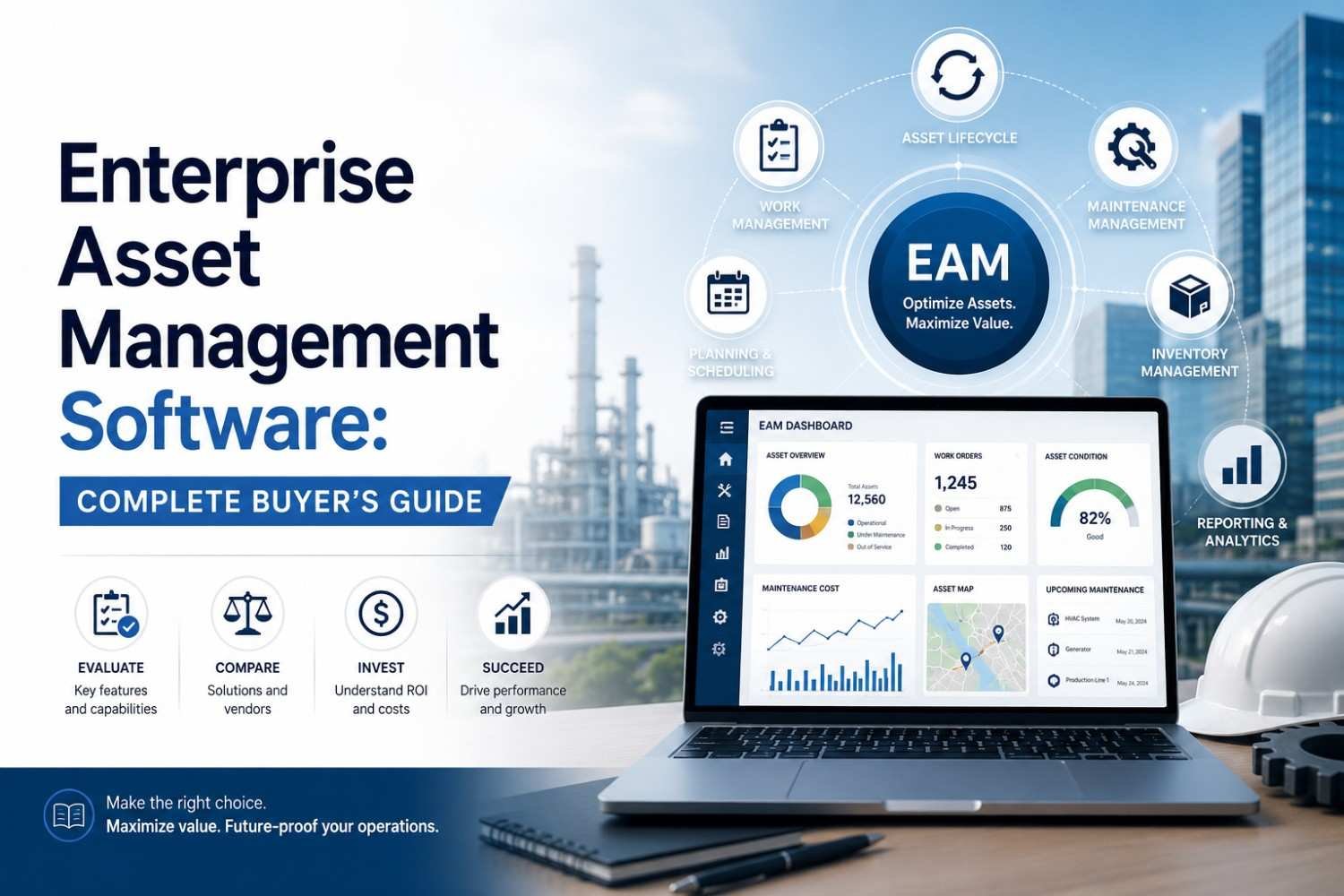
Enterprise Asset Management Software (EAM Software) provides a centralized solution for managing, monitoring, maintaining, and optimizing assets throughout their lifecycle.
In 2026, EAM software has become one of the most important technologies for manufacturers, utilities, energy companies, logistics providers, and industrial enterprises pursuing digital transformation initiatives.
What Is Enterprise Asset Management Software?
Enterprise Asset Management Software is a comprehensive platform that helps organizations manage physical assets from acquisition through retirement.
The software enables businesses to monitor asset performance, schedule maintenance, track equipment health, manage work orders, improve compliance, and optimize asset utilization.
Unlike basic maintenance tools, modern EAM platforms integrate predictive analytics, Industrial IoT, artificial intelligence, and business intelligence capabilities.
Why Enterprise Asset Management Matters
For industrial organizations, physical assets represent some of the largest investments. Poor asset management can lead to equipment downtime, production disruptions, increased costs, and safety incidents. EAM software helps maximize return on investment while reducing risk.
Key Benefits of Enterprise Asset Management Software
1. Improved Asset Utilization
Monitor equipment usage, identify underutilized assets, improve resource allocation, and increase operational efficiency.
2. Reduced Maintenance Costs
Optimize maintenance schedules, prevent unnecessary repairs, reduce emergency maintenance, and improve technician productivity.
3. Predictive Maintenance Capabilities
Using Industrial IoT sensors and predictive analytics software, organizations can detect anomalies, predict failures, and prevent unexpected downtime.
4. Regulatory Compliance Support
Maintain maintenance records, generate compliance reports, track inspections, and support audits to reduce regulatory risks.
Core Features of Enterprise Asset Management Software
Asset Lifecycle Management
Track asset acquisition, installation, maintenance history, performance metrics, and retirement planning.
Work Order Management
Schedule maintenance activities, assign technicians, track completion status, and manage repair histories.
Asset Tracking Software
Monitor equipment locations, usage patterns, maintenance status, and asset performance in real time.
Inventory and Spare Parts Management
Track spare parts, monitor inventory levels, prevent shortages, and optimize procurement.
Industrial IoT and AI in Enterprise Asset Management
Industrial IoT sensors and artificial intelligence enable real-time monitoring, predictive maintenance, anomaly detection, and performance optimization.
Cloud-Based Enterprise Asset Management Software
Cloud-based EAM solutions offer scalability, remote accessibility, lower infrastructure costs, and automatic updates.
How to Choose the Right EAM Software
Organizations should evaluate asset management capabilities, predictive analytics, integration options (ERP, IIoT, BI), security, and scalability before selecting a platform.
Enterprise Asset Management Trends for 2026
- AI-Driven Maintenance
- Industrial IoT Expansion
- Digital Twin Technology
- Predictive Analytics Growth
- Sustainability Monitoring & ESG Reporting
Frequently Asked Questions
What is Enterprise Asset Management Software?
Enterprise Asset Management Software helps organizations manage physical assets throughout their lifecycle while improving maintenance, reliability, and performance.
How does EAM software reduce maintenance costs?
The software enables predictive maintenance, automates work orders, and improves asset visibility, reducing unnecessary repairs and downtime.
What is the difference between EAM and CMMS?
CMMS focuses primarily on maintenance management, while EAM provides broader asset lifecycle management capabilities.
Conclusion
Enterprise Asset Management Software has become a mission-critical technology for industrial organizations seeking greater asset reliability, lower maintenance costs, improved compliance, and stronger operational performance.
By combining asset lifecycle management, predictive maintenance, Industrial IoT, artificial intelligence, business intelligence, and cloud-based scalability, modern EAM platforms help organizations maximize the value of their physical assets.
As industrial enterprises continue investing in digital transformation and operational excellence, Enterprise Asset Management Software will remain one of the highest-value software categories throughout 2026 and beyond.